Harriet Leaman
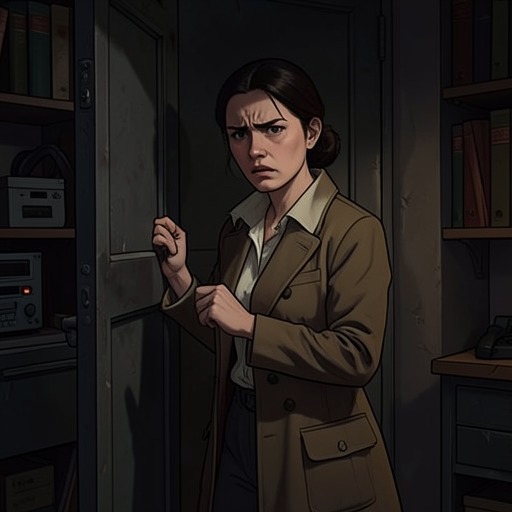
Hallowe'en PartyHarriet Leaman, known locally as Mrs Leaman, is a cleaner and former employee of Mrs Llewellyn-Smythe. Her recollection of witnessing a handwritten document becomes important when the investigation distinguishes it from the forged codicil submitted for probate: Harriet describes seeing Mrs Llewellyn-Smythe write and sign, while the legal record identifies different witnesses to the forged document. Her testimony introduces the possibility of a real codicil without resolving every question about what she saw.
Background and Connection to Mrs Llewellyn-Smythe
Harriet says she has cleaned for local women since her husband died five years earlier. Before Colonel and Mrs Weston came to live at Quarry House, she had worked for Mrs Llewellyn-Smythe. That earlier employment gives her a direct connection to the household and to the period when the disputed documents were made, though she is not presented as a lawyer or an expert on wills.
The established pattern of Mrs Llewellyn-Smythe’s estate provides a sharp contrast with the document Harriet recalls. For many years, the bulk of the fortune was left to her nephew, Hugo Drake, and his wife, with the survivor inheriting if either died first; charities and old servants also received bequests. The alleged final codicil instead left the residue to Olga Seminoff. Harriet knew that this would take the money away from the family, and understood the disposition as a startling departure from the old arrangement.
Harriet’s Account of the Document
Harriet recounts that Mrs Llewellyn-Smythe was unwell one day and asked Harriet and Jim, a young man who helped in the garden and brought in fuel, to come into her room. Papers lay on the desk. Mrs Llewellyn-Smythe sent Olga out, saying that Olga must not be involved in that part of the matter, then told the two visitors that she was making her will. A piece of blotting paper covered the upper part of the page, but the lower portion was visible.
According to Harriet, Mrs Llewellyn-Smythe wrote two or three lines with the scratchy pen she habitually used rather than a biro, then signed her name. She asked Harriet and Jim to write down their names and addresses as witnesses to the writing and signature. Harriet says she understood that they had seen Mrs Llewellyn-Smythe write and sign, and that the two of them had added their names. The care with which Harriet remembers the pen, the covered portion of the page, and the requested addresses makes her account specific, but it remains her recollection rather than an expert assessment of the document.
As Harriet was leaving, she turned while dealing with the door, which did not always latch unless pulled shut. She says she was not deliberately looking through the papers. She then saw writing on the last page of what she regarded as a legal document: new, scratchy writing that she understood had been made the previous morning. The text, as she remembered it, was a codicil leaving Mrs Llewellyn-Smythe’s entire fortune to Olga in consideration of Olga’s kindness and attention during her illness. Harriet recalled that the page bore Mrs Llewellyn-Smythe’s signature and the signatures of Harriet and Jim. She put the papers back, not wanting Mrs Llewellyn-Smythe to know she had been looking among them.
The Forged Codicil and the Witness Question
Harriet says she was surprised by the proposed inheritance. She knew Mrs Llewellyn-Smythe was very rich, and thought it remarkable that the fortune should go to Olga rather than the family. Although Harriet was not particularly fond of Olga, whom she considered sharp-tempered, she acknowledged that Olga had been attentive and polite to her employer. Harriet speculated that there might have been a family quarrel and that Mrs Llewellyn-Smythe could later change the will; she says she put the papers back and then forgot about them.
The document Harriet describes must be kept separate from the codicil that was produced for probate. Mr Fullerton explains that handwriting experts found the probate codicil to be a complete forgery, bearing only a faint resemblance to Mrs Llewellyn-Smythe’s handwriting. Olga had often written personal letters for her employer and sometimes signed them in her name, giving her practice at imitation. The forged codicil was not witnessed by Harriet: according to the solicitor, its witnesses were Mary Doherty, who had died, and James Jenkins, the Jim Harriet had mentioned, who had gone to Australia.
When Harriet speaks to Ariadne Oliver, nobody has asked her whether she knows anything about a will. Her account therefore arrives as previously unreported information, not as a claim already tested in the proceedings. After hearing it, Hercule Poirot contacts Mr Fullerton and learns that the forged probate document and Harriet’s recollection may refer to separate codicils: he tells Ariadne Oliver that there seems to have been a real codicil as well. The distinction preserves the force of Harriet’s testimony while preventing it from authenticating the forged document.
Narrative Role and Significance
Harriet’s importance lies in the gap between witnessing a signature and establishing the identity or legal status of a document. Her account appears at first to support the story that Mrs Llewellyn-Smythe left her fortune to Olga, but the legal evidence establishes that the codicil submitted for probate was forged and was witnessed by other people. Poirot’s distinction between that forgery and a possible real codicil turns Harriet’s memory from a simple confirmation into a complication in the case.
Her delayed disclosure also reflects her uncertainty about whether she had done something wrong by looking at the papers. She had not been asked about the will, and she had put the document back rather than reporting what she saw at the time. Once she tells Ariadne Oliver, however, details that had seemed private and inconclusive—the scratchy pen, the signatures, and the extraordinary bequest—become evidence that must be considered alongside the handwriting examination and the probate record.